Prefer to listen?
This website can read aloud to visitors.

This website can read aloud to visitors.
This section is part of the Energy Limiting Conditions Toolkit for nurses and Allied Health Professionals. Click here to access the starting page of the Toolkit. Or go directly to other sections included in this toolkit:
Section 2 – Understanding Energy Limiting Conditions
Section 3 – Barriers to care: causes, experiences and impacts
Section 4 – Case study: lived experience of care with an ELC
Section 5 – What good care looks like: a guide for health and care practitioners
Section 6 – Making services more accessible
Section 7 – Research, policy and resources
Section 8 – About the toolkit
2.1 What are Energy Limiting Conditions?
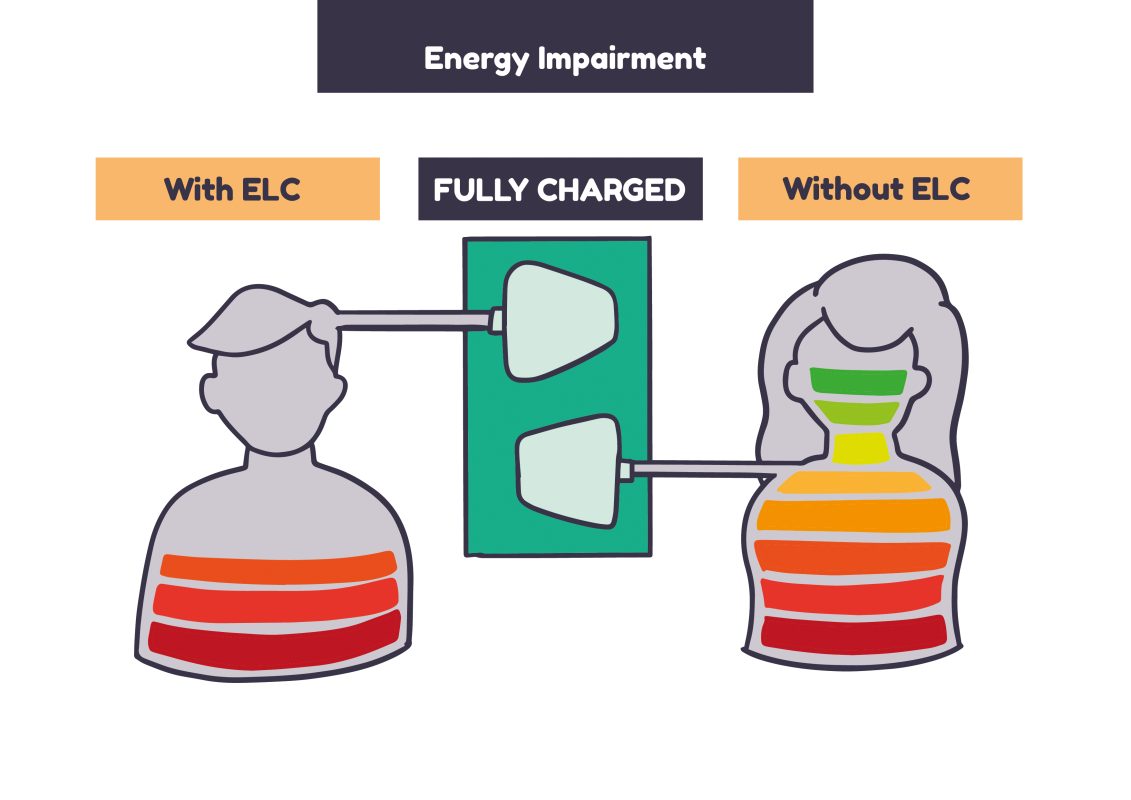
The concept ‘Energy Limiting Conditions’ (ELC), sometimes referred to as Energy Limiting Chronic Illness (ELCI) was established following research by Chronic Illness Inclusion. It describes shared experiences across long-term health conditions in which energy impairment and debilitating fatigue are key symptoms. This is more than just being tired. Energy impairment is usually physical and congnitive and has significant negative impacts on all areas of a person’s life. People with ELC often experience exhaustion that isn’t relieved by sleep, cognitive impairment and post exertion symptom exacerbation, or ‘payback, a significant increase in symptoms after pushing through exhaustion.
2.2 How common are Energy Limiting Conditions?
There is no definitive list of conditions considered ELC as energy impairment is experienced by people living with a range of conditions. These include neurological, musculoskeletal, and auto-immune diseases, ME/CFS, fibromyalgia, Long Covid, epilepsy, sleep conditions and HIV/AIDS amongst others. For other people energy impairment may be a result of treatment rather than the condition itself, such as people undergoing, or who have previously had chemotherapy or radiotherapy for cancer. Some neurodivergent people and people with some mental health conditions may also experience debilitating energy impairment. Like work on chronic pain, it is the focus on the shared symptom which is important for ELC.
According to estimates by the Department for Work and Pensions (DWP), 1 in 3 disabled people in the UK experienced impairments in stamina/breathing/fatigue. People with ELC are a large, overlooked section of the disabled population and one that is growing.